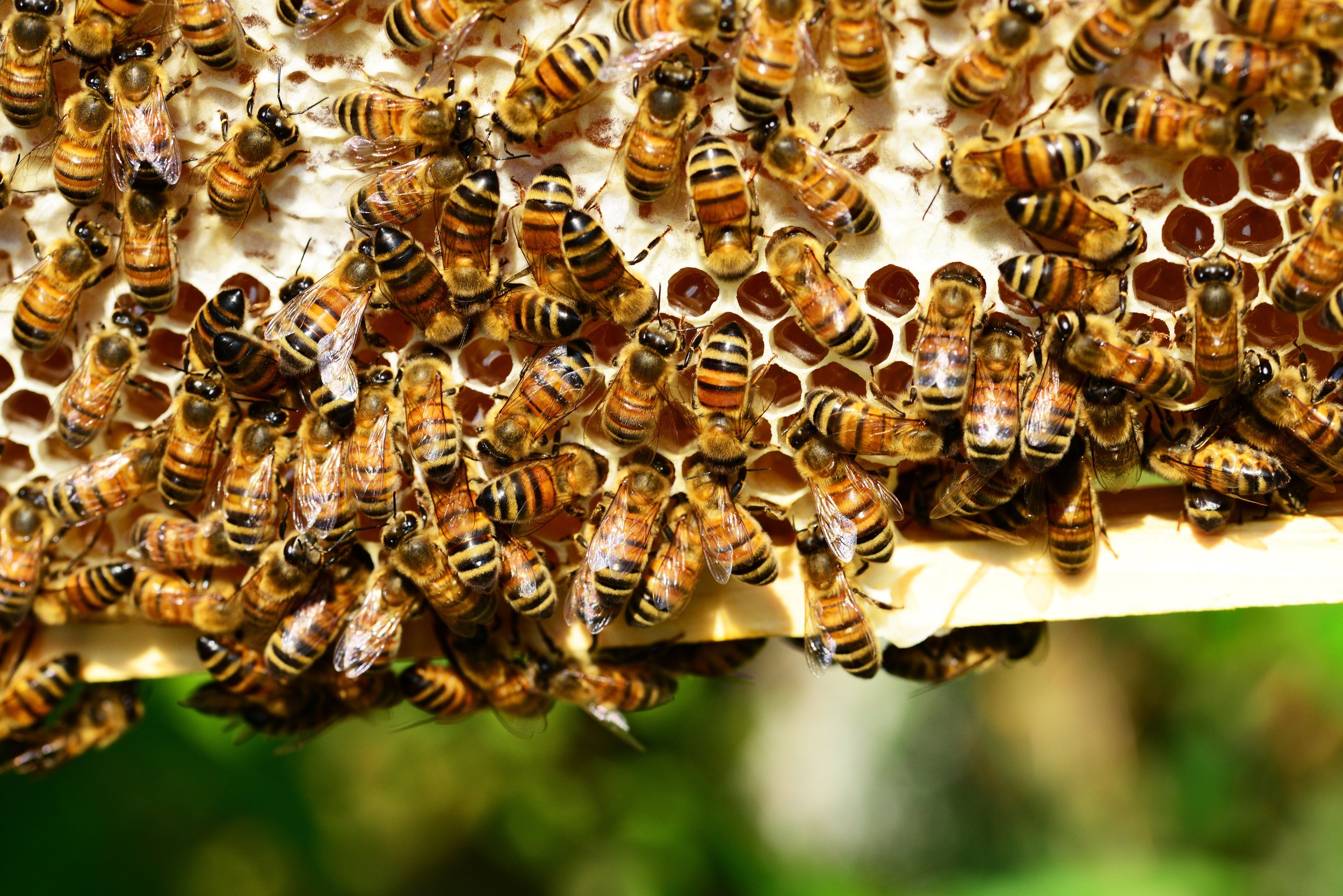
The Hive that Kills its Queens (and I Think That’s Good) | Honeybee Hive
It’s a hot day on the front porch at CloverLock Lane, though I’m enjoying the spider-free space, temporary as that is. The heat is unbearable - the sun is at its peak and the humid air is begging for the release of rain that won’t come for hours. There’s plenty that I could be doing here. Reading the book club pick I haven’t started, starting needlepoint gifts I desperately need to finish before the holidays, catching up on the many volunteer tasks I’ve overcommitted to. But instead, I’m balanced quite precariously on a wicker chair that might be as old as I am, pressing the eyecups of a set of binoculars into my glasses. I sit there for what feels like hours watching the newest additions on CloverLock Lane, our bees returning from a day of foraging for the hive.
One bee catches my eye in particular as she steps out of the shady hive entrance, she’s small and a little lighter in color than the others, one of the newer bees, hatched probably two weeks ago. She lifts into the air with ease. It’s hard not to lose her in the crowd, as she flies in figure-eight and spiral patterns, orienting herself and the location of her home. And from there she flies off, in search of nectar to bring home that she and her sisters will work together to turn into honey to feed themselves for the winter.
I wonder what she’s memorizing in the moment. The hive obviously, the shape, the smell, the slightly wonky slope of the landing platform. Examining the trees and forest around her, determining where she can fly and how she can come home again. But I wonder if she’s memorizing anything about herself. Or if there’s even a “herself” to memorize at all, an existence separate from the tens of thousands of sisters with whom she’ll spend her seven-week life in the superorganism that is the colony.
A superorganism is a group of individual creatures that work together as a living unit and cannot survive on their own as individuals.
The hive itself is the immune system and the lungs, coming together as a whole to fan their wings or shiver together to change the temperature; certain bees will remove dead bees and kick out sick ones to keep the colony healthy.
The workers act like muscles, white blood cells, and a stomach. They’ll gather nectar and pollen to make food, clean waste from the hive, build comb to store food or eggs, and defend the hive from dangers.
The queen, despite her title as the leader, is the mother of the hive. She is hatched from a different kind of cell, will be the only one of her kind, raised with attendants who take care of her, and will leave the hive only once in her entire life. She will lay thousands of eggs every day, and produce pheromones that help keep the hive calm and united.
The real leaders of the hive are a collective group of female worker bees who discuss and vote on decisions through waggle dances. These bees will attend to the queen, make decisions about whether the workers should scout new homes, raise new queens and feed them special foods, and, when needed, lead the process of supersedure.
Supersedure is usually reserved for old or injured queen, the workers of the hive will come together in a ball, and kill her.
Except it’s not always that easy or simple. Sometimes the bees just don’t like their queen, and the body will come together and kill her.
Our first hive has had three supersedures in just four months.
First, in April, not long after we installed the hive. Our starter colony was a package, a random selection of worker bees from various hives paired with a queen. Most of the time they’ll work together, but in this case, the workers did not like their queen. Just a few days in, she was dead and gone, but with no eggs or larva that could replace her.
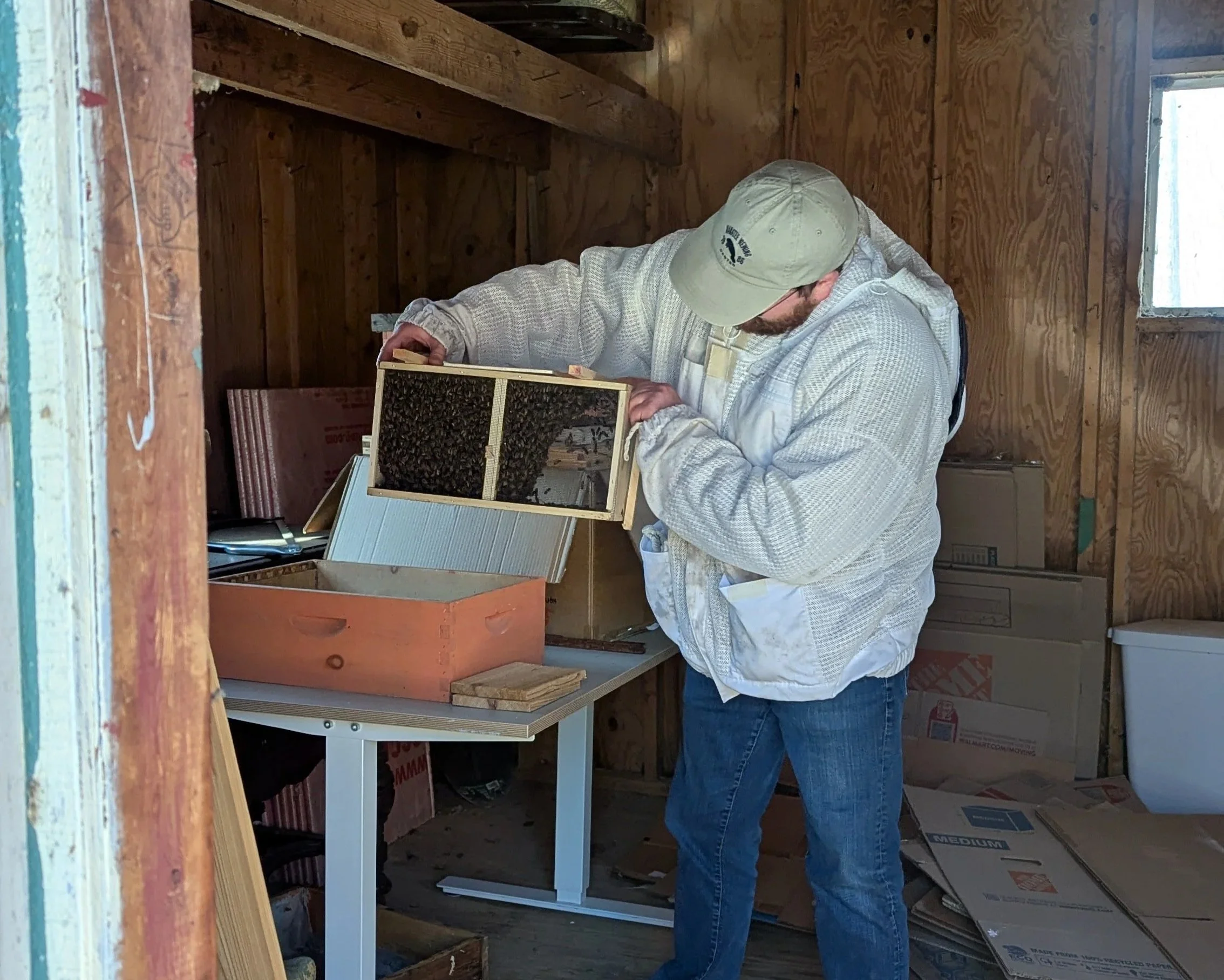
C getting the first package of bees ready to go into the hive for the first time
A huge credit to the online bee community, we were able to get in touch with the only distributor in Virginia who had queens so early in the season, and purchase a replacement. After a three-hour round trip, we prepared this new queen for the hive with an extra slow release, giving the workers plenty of time to adjust.
The first hive inspection after her release went really well, but just a few weeks later, she was nowhere to be found. Another dead queen, workers deeming her too poor to serve as unifier and mother of their future. But this time, they waited just long enough for her to lay some brood.
A few days later, we spotted her: a home-bred queen in our hive. She was incredible, serving as a laying powerhouse, growing the size of the hive, filling out frames of comb. Her offspring were friendly and calm, which is good. But they also defended the hive, an incredibly positive sign that they are well-fed and happy, even though it meant a few stings for the keepers (I would not recommend forehead stings, a real 0/10 experience).
The high lasted only a few weeks though, until we started to see queen cups again. Capped cells that the bees place separately from other larva, indicating they were preparing for another supercedure.
With very little intervention, they raised their new queen and removed the third. For the last few weeks, they’ve been happy and healthy with their fourth queen, and hopefully the last one for a while.
When we first started beekeeping, the best advice we got was that almost every single thing you’ll do as a beekeeper will be to make you feel better. There is very, very little that the bees actually need you to do. While the bee wouldn’t survive on its own, the superorganism is capable of caring for itself and working for the common good.
Human society isn’t exactly a superorganism. Unlike a bee who dies alone, we can physically survive on our own. But there’s something to be said for having a community, a hive around you to lean on for support and work together towards common goals.
The last year has left me feeling like the little forager, spinning in circles trying to orient myself in a place that looks a lot different than where I’d been before. I’ve survived just fine, accomplishing a lot around the property and professionally, but am I thriving? I don’t think so.
Despite our society’s emphasis on hyper-individualism, being so focused on pulling yourself up, needing no one but yourself to succeed, and not owing anyone anything, so many people are struggling.
It’s almost as though we’ve lost the forest in the process of becoming trees. Great, independent, lonely trees.
Relaxing on the porch, the hive settles down for the evening, the young bee finds her way back to the doorway of the hive with her sisters, grounded and understanding where her home sits in the world, and ready to do her part for the whole.
Thank you for reading! Looking for more bees? Check out this playlist on our YouTube channel with our 2026 hive inspections, or hang out with the bees from the comfort of your own porch with some lo-fi chillhop bees to relax to!
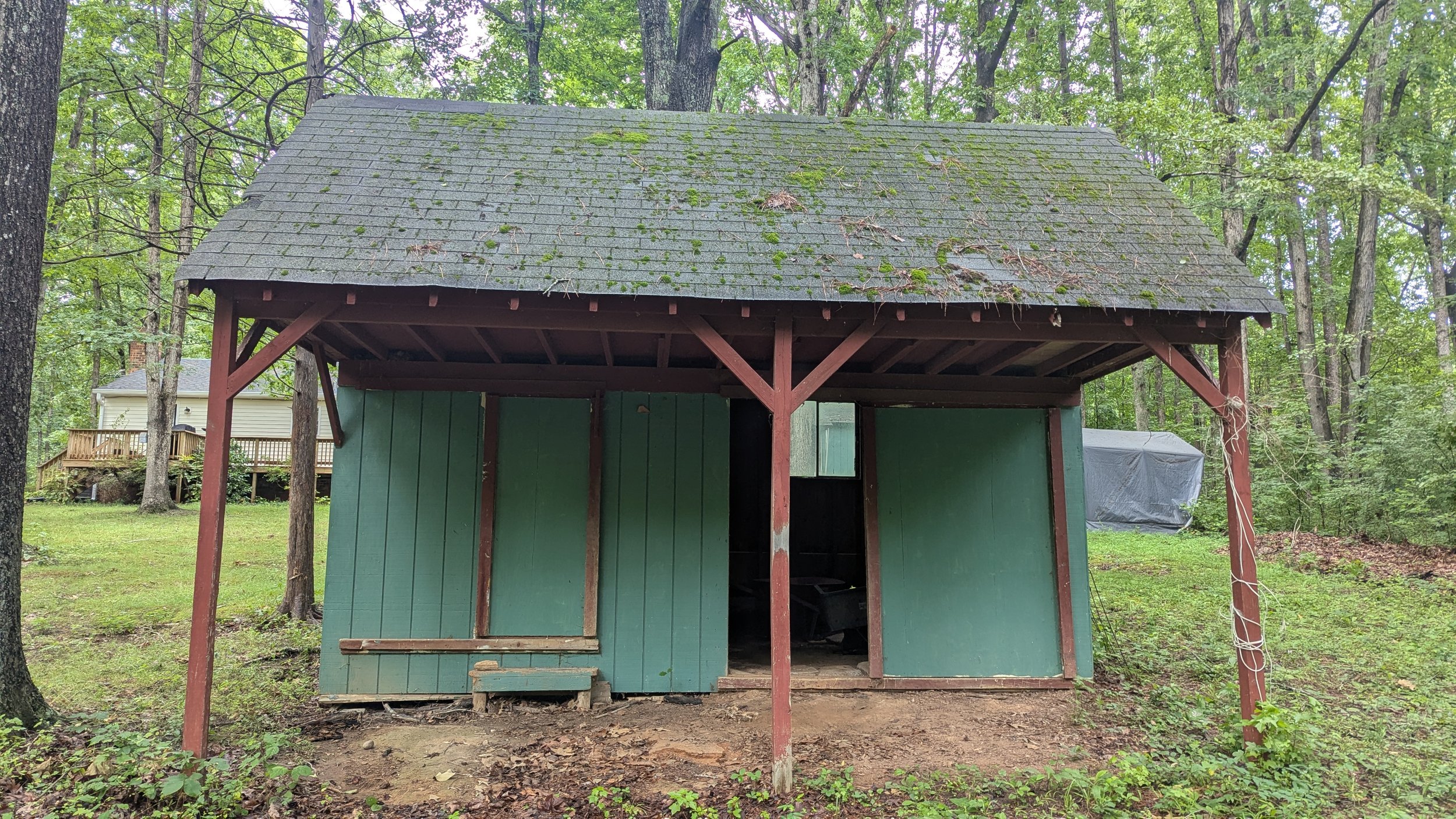
The Barn Rehab Project
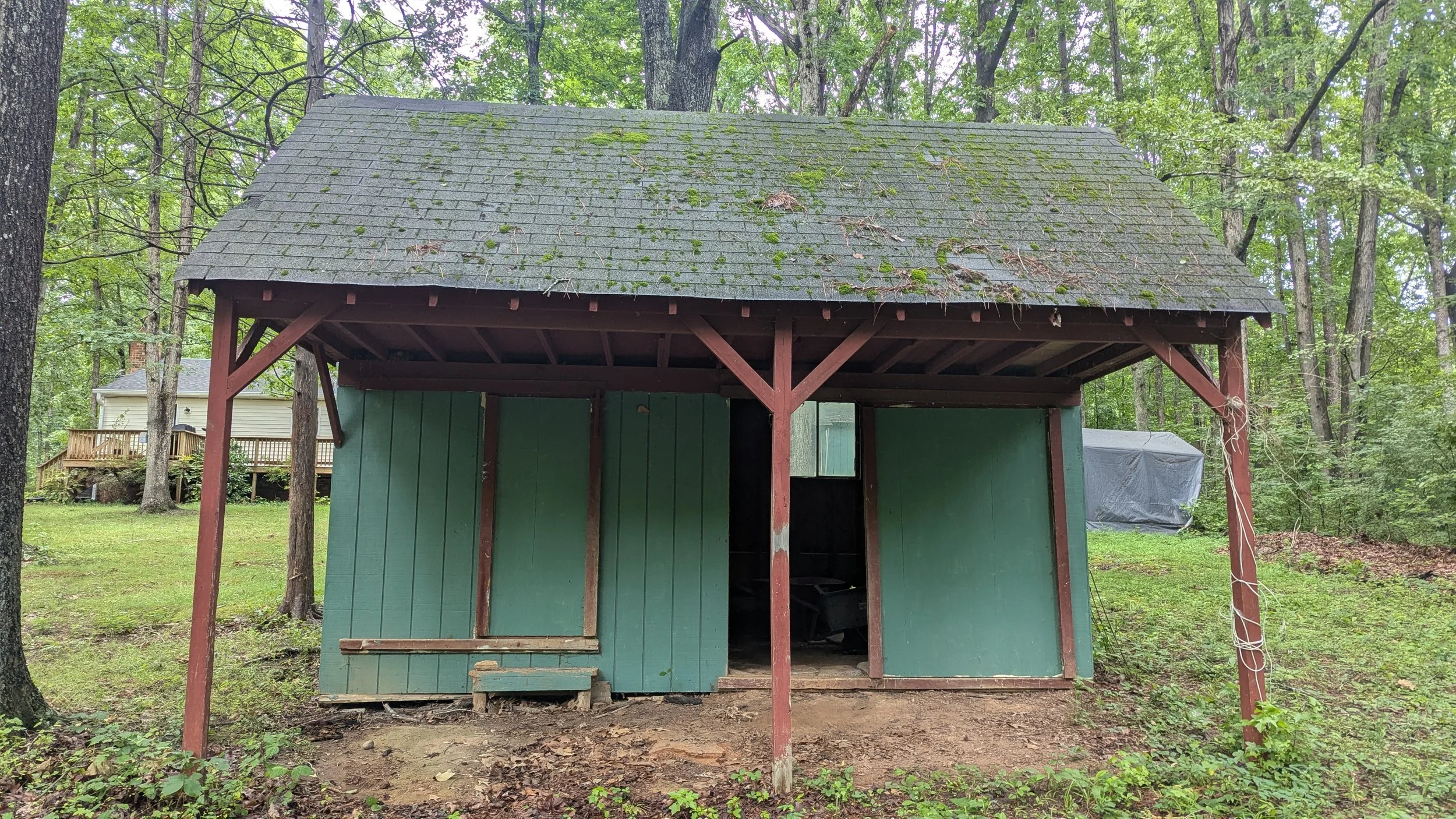
Welcome to the Barn
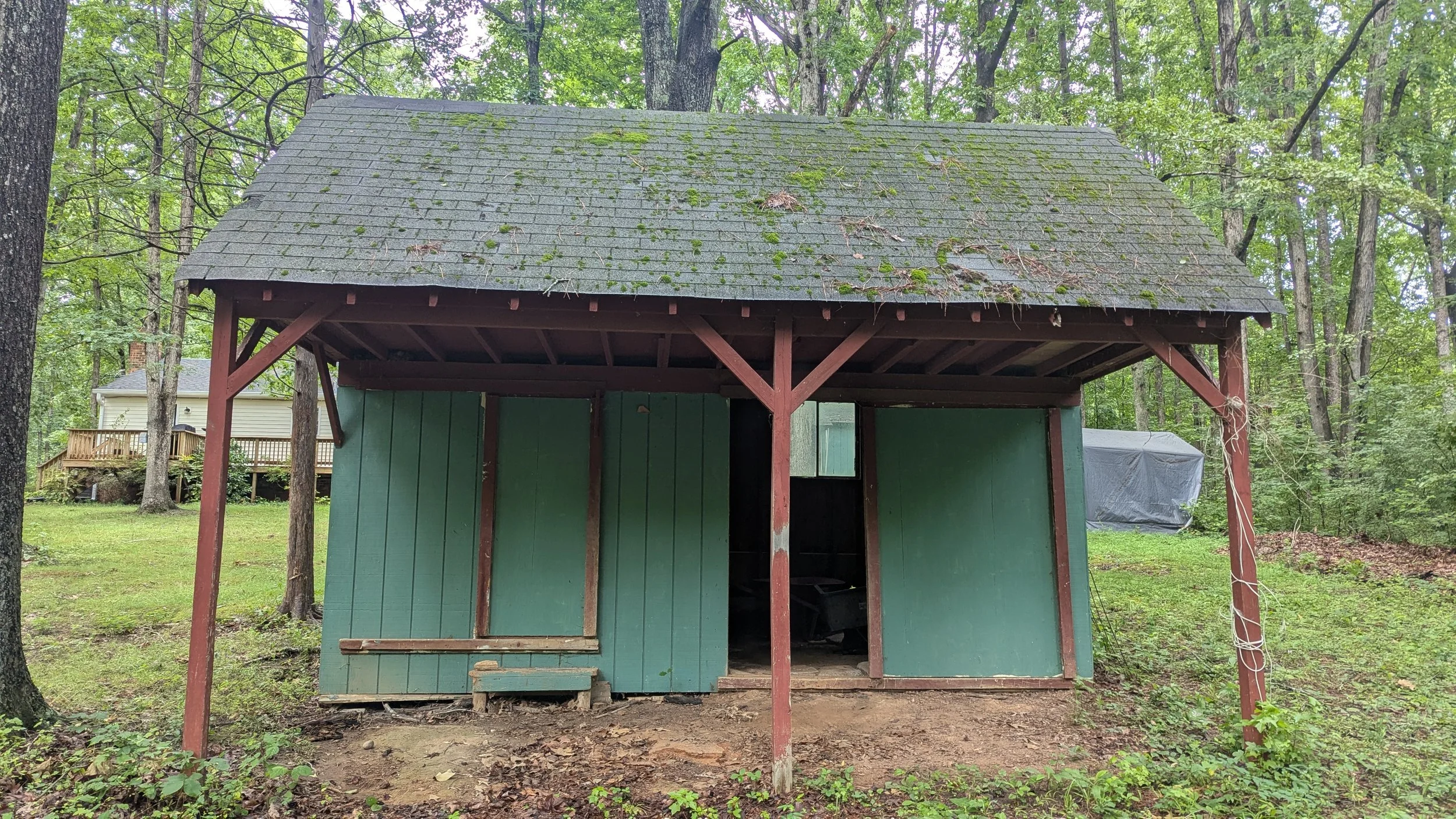
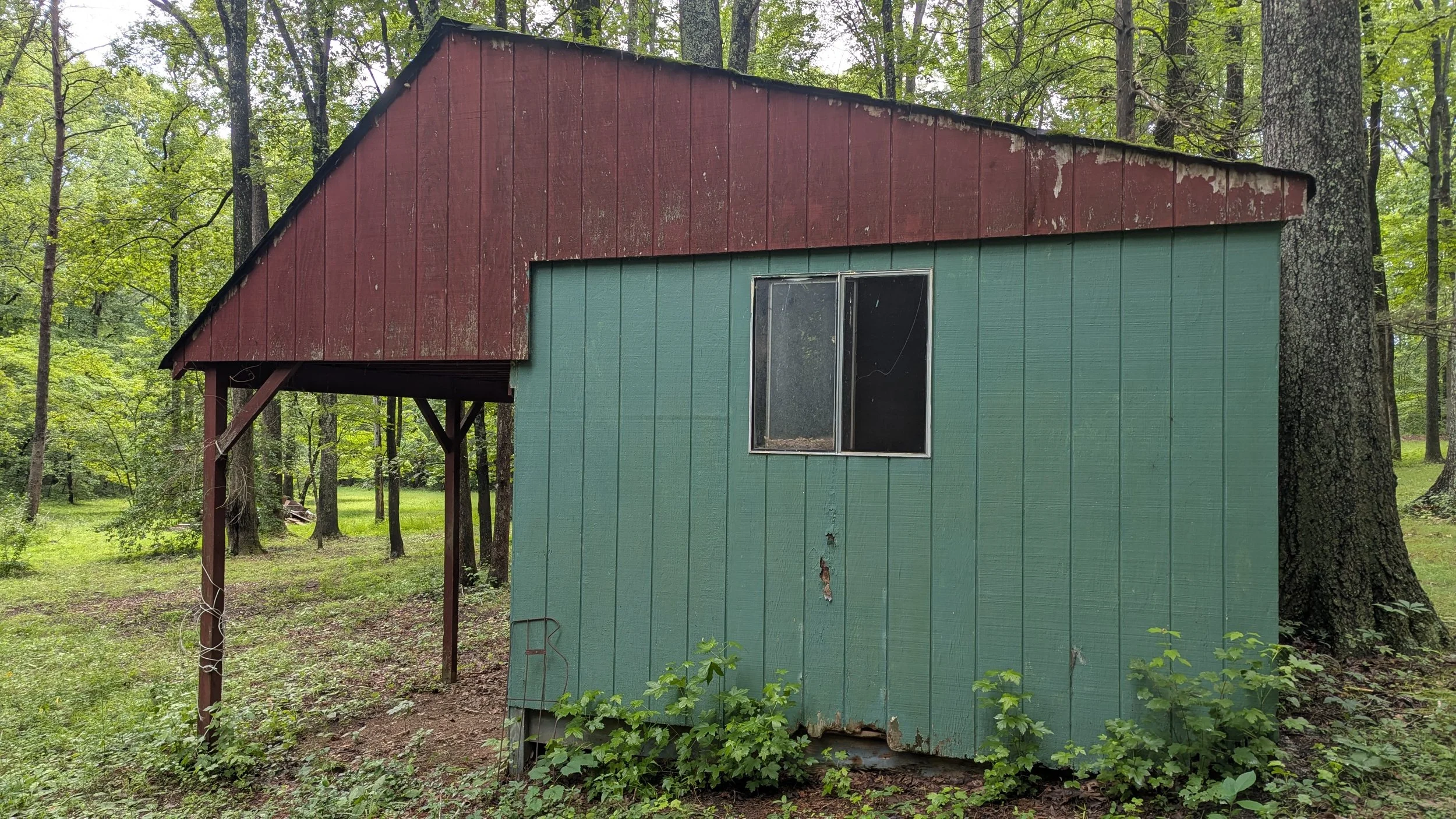
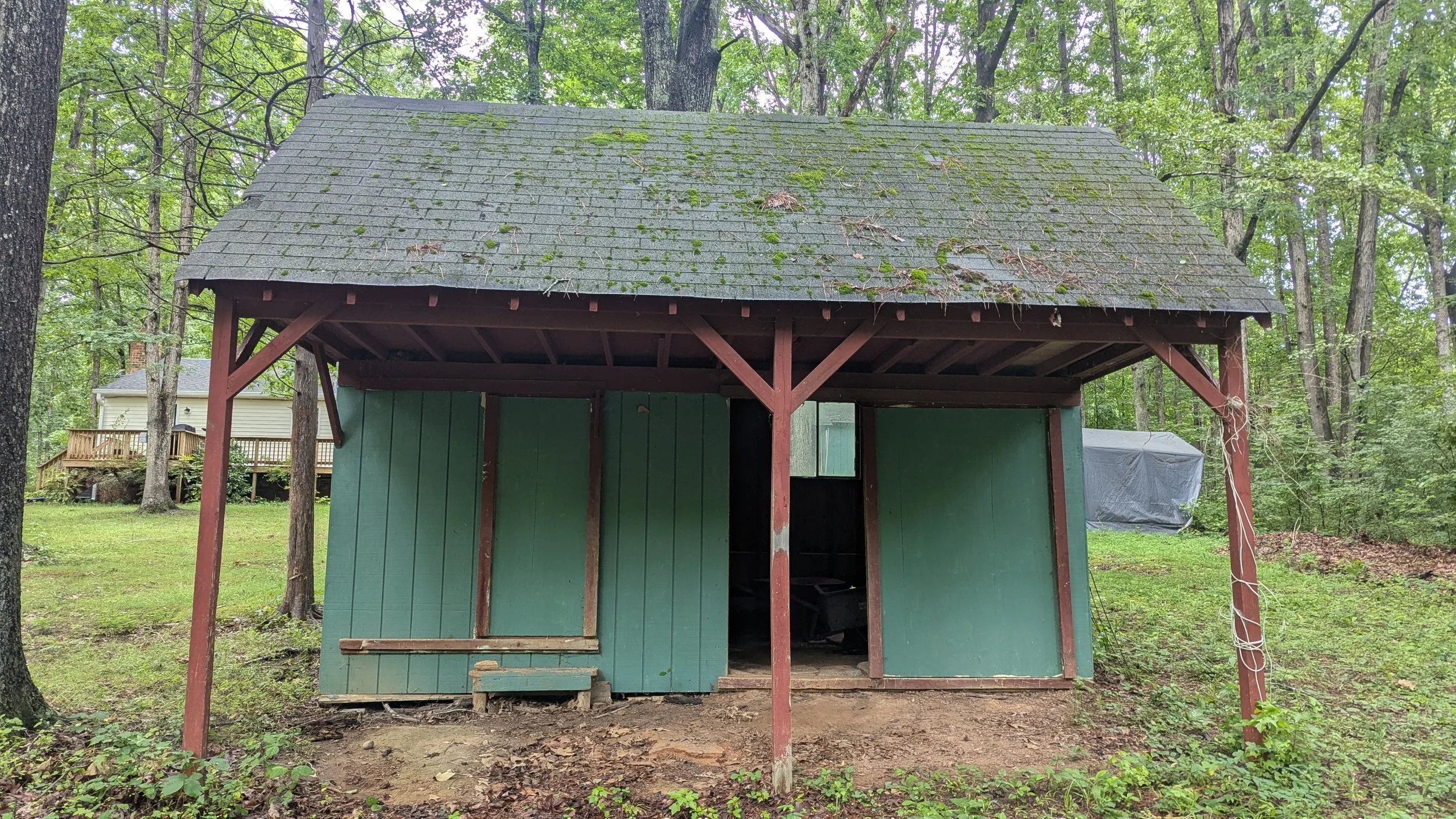
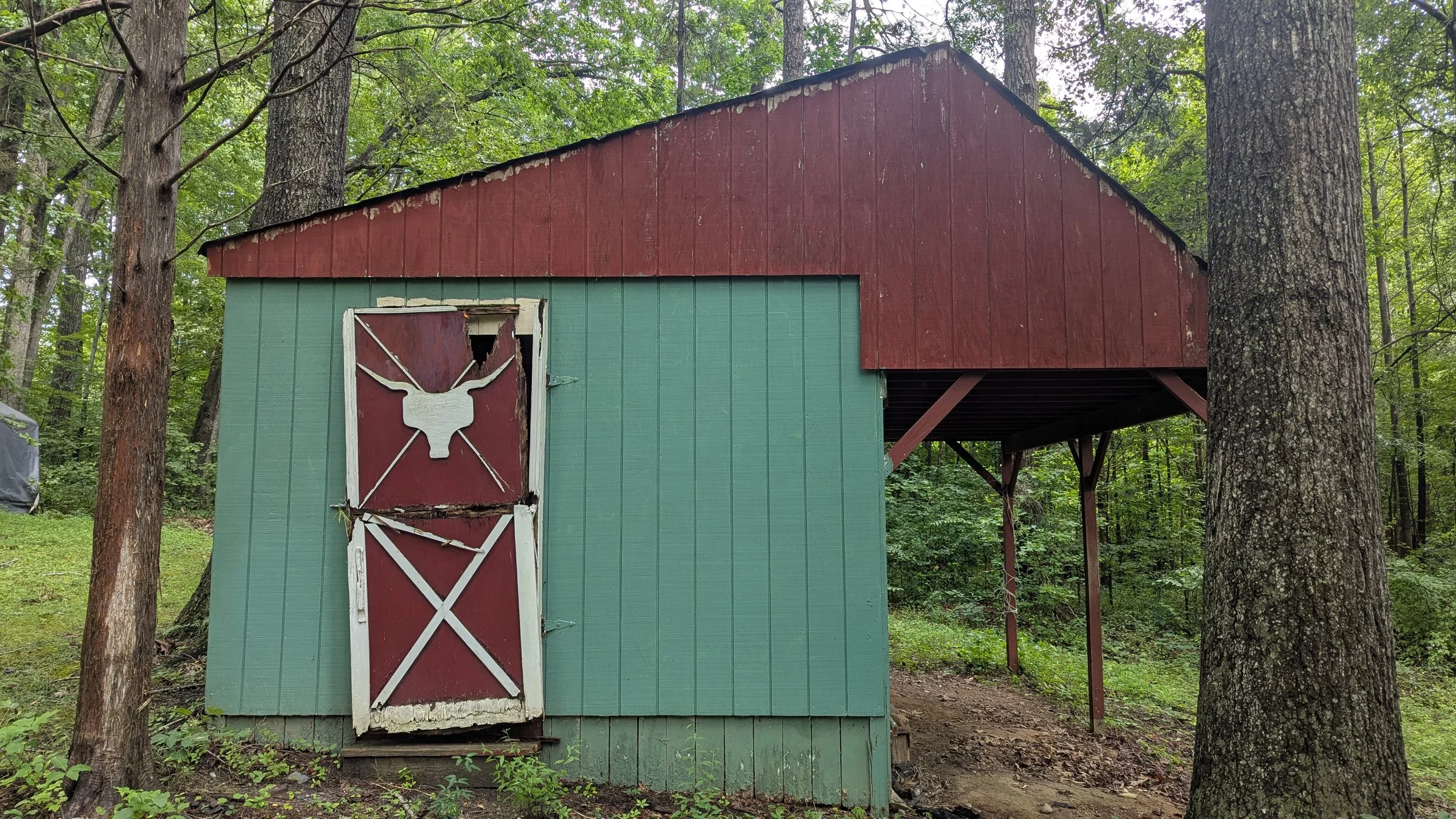
The barn is a little rectangular building with one ‘stall’ space with a sliding barn door, a small feed or tack room space with a separate Dutch door, and an overhead hayloft. The stall has what I think is a hay manger, a small door dividing the animal area from the food area. There aren’t any rubber mats or stones for storage, only the natural clay dirt that has hardened into a really solid stone-like floor. There are cobwebs galore, and something has burrowed quite cozily under the feed room area.
On the outside, there are a few points where there clearly used to be a fence attached to the barn, but it’s been gone for a very long time. The sliding barn door doesn’t really slide anymore, so it’s been open for our six months, plus the last three years of the home being vacant. It’s a wooden door on wooden tracks, so it’s not going to slide as easily as modern metal rollers. The Dutch door to the feed room is barely a door anymore; every week, it’s sliding further and further off the hinges. We’re not messing around with it yet, leaving the door shut until she gives up. The roof needs some love, though luckily, the overhang on the front is in great shape
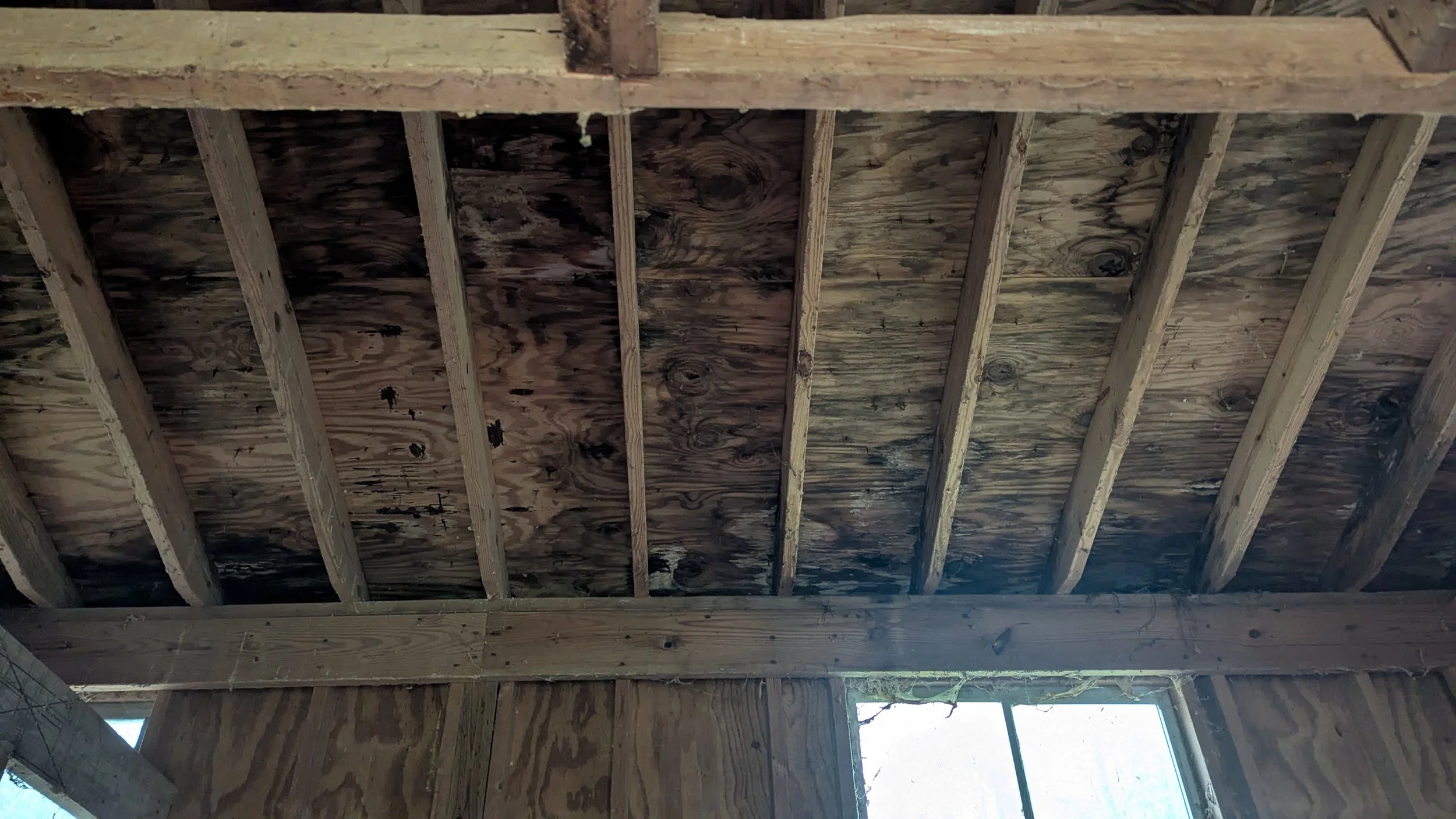
There’s also a lot of damage to the bottom of the back wall. Our property has a pretty significant slope, so the water rolling down from the house gutters flows directly into the back here. The barn backs up to a pretty big tree, and there are a few others in the way of the new fence we’re planning. The trees are dropping a lot of branches and litter on the roof of the barn, causing more damage to the already leaky roof.
The Goal
Based on what the previous homeowner left, we think they used to have a horse in this little barn. Despite having five acres, which is technically plenty of room, we’re not planning on fencing a big enough space for a full-size horse. Instead, we’re aiming for some smaller friends: a couple of goats, a couple of sheep, and maybe a donkey or pony, depending on the field size. The field we build will be shared with our chicken coop too, which we’ll build from scratch a couple of yards down.
The To Do List
There is a lot to be done on the barn! Here’s the to-do list we’re starting with, roughly in order:
Cut down the big tree behind the barn
Repair the water-damaged back wall and protect from future water damage
Repair the back roof and add overhanging shingles on the sides
Clean! Sweep the cobwebs out, remove the trash, toss the old furniture
Repair the floor in the storage room
Repair the gate in the storage room
Check flooring in the hay loft, repair if needed
Replace the Dutch door
Fix the sliding stall door - replace? new tracks? TBD!
Stall flooring - need to figure out a plan! Level, bluestone, and mats? TBD!
Paint the exterior
Bring water to the barn
Bring electricity to the barn
Build the field fencing & gate - DIY? Hire out?
Keep an eye out on the Barn Rehab Project Page to catch all the newest updates as they’re posted and follow along on social!